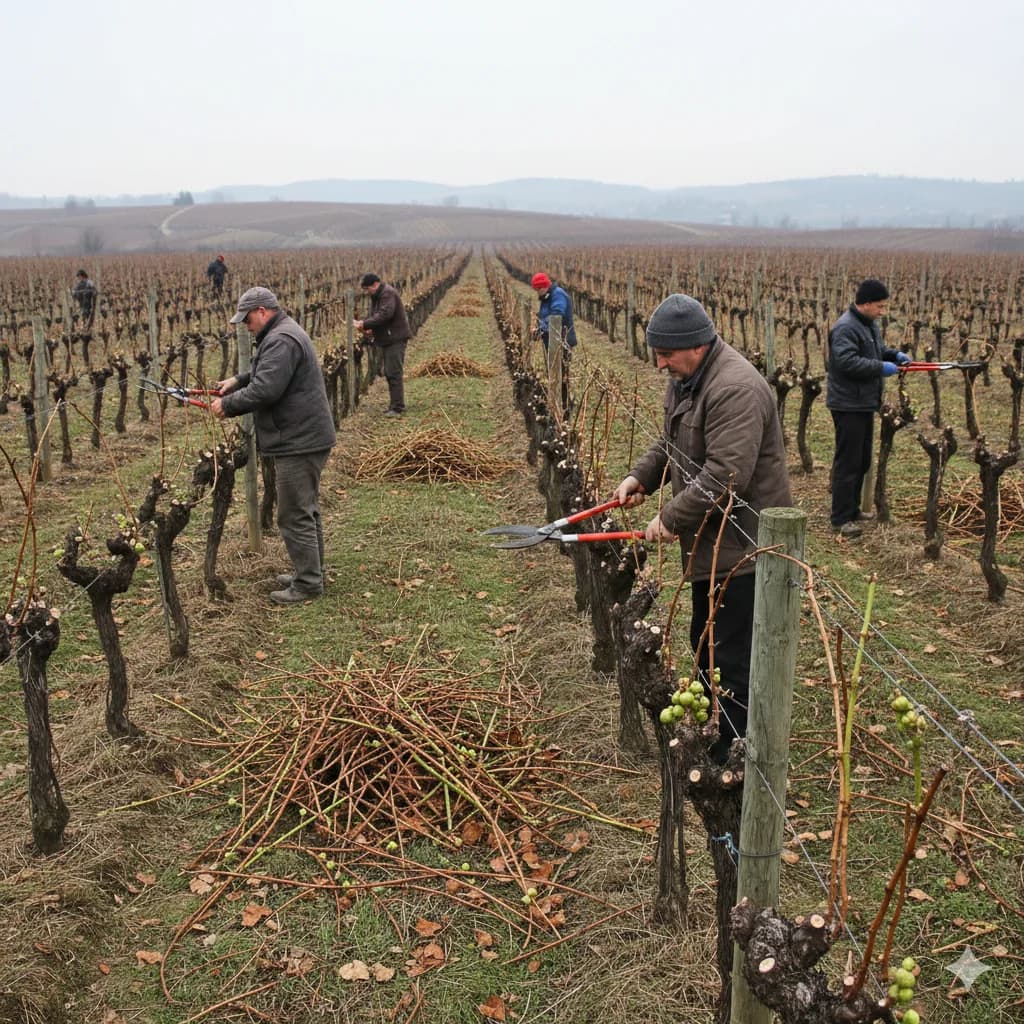
Workers are leaving healthy, fresh vine shoots with more fruit buds, which will determine the yield of the next season, and are cutting off old, weak, and sparsely budded branches.
Branches that will bear fruit the following year are also cut short, leaving only the buds. As spring approaches, activity in the vineyards increases, with pruning work being carried out simultaneously across thousands of acres.
Current situation at vineyards:
1. Record Rainfall and Floods At the end of January and the first half of February, the region experienced the heaviest rainfall in recent years. 212 kg of rain fell per square meter in just the first 13 days of February, the overflowing of State Hydraulic Works (DSİ) canals resulted in some agricultural lands and vineyard roads being flooded. This made it difficult for producers, who were still in the pruning or bud tying stages in their vineyards, to enter the fields.
2. The Biggest Danger: "False Spring" and Early Awakening The rise in air temperatures above seasonal norms following the rains (due to the effect of the southerly winds) caused "early bud bursting" (early leafing) in early grape varieties such as "Superior".
Risk: The earlier-than-normal awakening of the vines leaves them completely vulnerable to a possible agricultural frost in March and April. Producers are currently very worried about the possibility of the shoots being burned by the cold.