1. Injectable and Macrocyclic Lactones (Systemic Control) Systemic treatments form the protective backbone of herd management during an incursion. Long-acting macrocyclic lactones are highly recommended to kill deep-tissue larvae from the inside out and protect animals from re-strike (Ward et al., 2026).
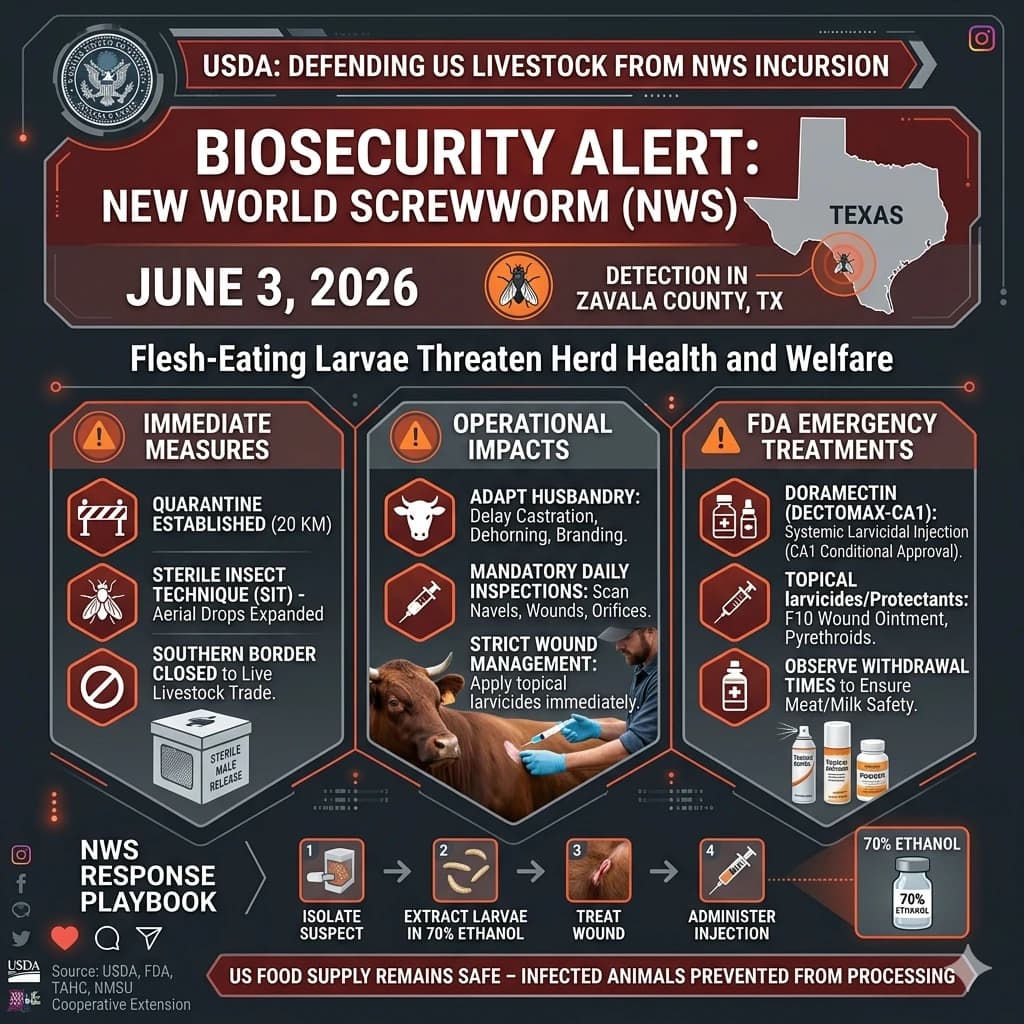
Doramectin (Dectomax-CA1): The FDA issued a notable conditional approval for a 100 mL size of Dectomax-CA1 specifically targeted against screwworm vulnerability (Hog Health, 2026; Dairy Health, 2026). This injectable provides systemic tissue coverage that is lethal to younger, burrowing larval instars (stages) before they can cause extensive myiasis.
Ivermectin / Long-Acting Formulations: Systemic injectable anthelmintics are widely used to establish continuous chemical protection in highly vulnerable populations, such as newborn calves (umbilical navels) or post-operative stock (Ward et al., 2026).
Critical Operational Constraint: Producers must precisely calculate and observe market withdrawal times for all injectable macrocyclic lactones (Ward et al., 2026). In lactating dairy cattle, many systemic macrocyclic lactones are restricted or carry strict milk-discard intervals, making topical alternatives the preferred choice for commercial dairies.
2. Topical Larvicides and Wound Protectants (Direct Application) When a wound is open or an active strike is detected, physical removal of the larvae must be immediately paired with localized chemical larvicides (Ward et al., 2026).
Cypermethrin and Pyrethroids: Widely used in topical aerosol sprays, pour-ons, and dusts. These act as fast-acting neurotoxins that paralyze and kill larvae upon contact within the wound bed, while acting as a strong repellent against oviposition (egg-laying) by adult female flies.
F10 Wound Ointment: The FDA has authorized the emergency use of specialized topical barriers like F10 ointment (Dairy Health, 2026). This compound combines local antiseptic properties with localized insecticidal vectors to sterilize the wound environment and kill hidden maggots.
Coumaphos (Organophosphate Dusts): Historically a cornerstone of NWS eradication programs, Coumaphos powder is approved for direct puff/dust application into deep puncture wounds or structural cavities (e.g., dehorning sites or fresh castrations) to create an immediate toxic barrier to newly hatched larvae.
3. Perimeter and Environmental Bio-Defense To reduce adult fly pressure around high-density animal holdings (like feeding pens and holding chutes), producers utilize environmental vector control:
Pyrethrins and Permethrins: Approved for misting systems and perimeter surface sprays in cattle confinement areas (Ward et al., 2026). Knocking down adult populations near facilities dramatically decreases the statistical probability of a female fly finding a fresh scratch or husbandry wound.
Standard Protocol for Suspected Struck Animals If an animal exhibits active larval activity, livestock operators are directed by veterinary authorities to execute the following sequence:
[Isolate Animal] ➔ [Extract/Kill Larvae in Alcohol] ➔ [Apply Topical Protectant] ➔ [Administer Systemic Injection] Isolate and Restrain: Move the animal away from the herd to prevent horizontal spread or further fly attraction (Ward et al., 2026).
Larval Collection & Identification: Using forceps, gently extract larvae from deep within the tissue bed (Ward et al., 2026). To confirm a case, larvae must be entirely submerged in 70% ethanol or isopropyl alcohol to kill and preserve them (Glance, 2026; Ward et al., 2026). Do not throw live or dead larvae on the ground or in the trash, as they can pupate and complete their life cycle in the soil (Glance, 2026).
Local Debridement and Topical Treament: Clean the wound thoroughly and pack or spray it with an authorized topical pyrethroid or F10 ointment to eliminate remaining hidden larvae and shield the open tissue (Dairy Health, 2026; Ward et al., 2026).
Systemic Prophylaxis: Administer an FDA-approved systemic injection (such as doramectin or ivermectin) to provide multi-week internal protection during the wound's healing phase (Ward et al., 2026).