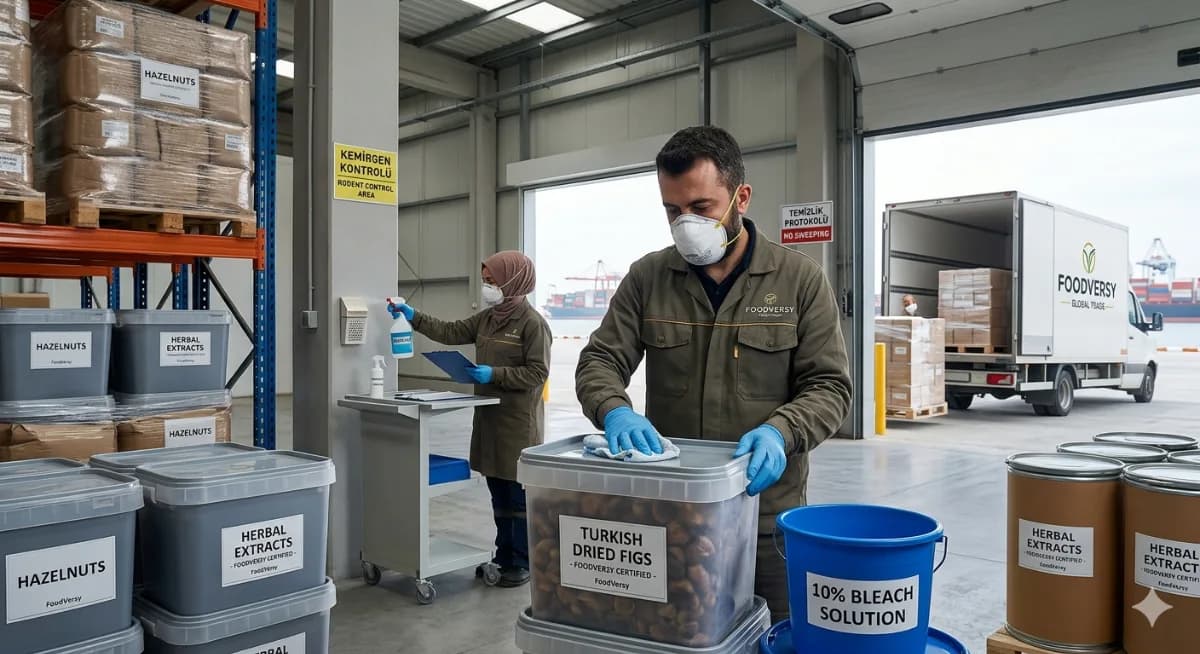
Hantavirus Prevention in the Food Supply Chain: A Guide for Global Exporters.
What is Hantavirus?
Hantaviruses are a family of viruses spread mainly by rodents. While they do not cause disease in their rodent hosts, they can cause fatal illnesses in humans, such as Hantavirus Pulmonary Syndrome (HPS) and Hemorrhagic Fever with Renal Syndrome (HFRS) (CDC, 2018).
Why the Food Industry is at Risk
Hantaviruses are transmitted when human workers breathe in "aerosolized" virus particles—essentially dust contaminated with rodent urine, droppings, or saliva (CDC, 2018). In the context of the food supply chain, risks emerge during:
- Long-term Storage: Dry goods like grains and nuts can attract rodents if not properly sealed.
- Warehouse Cleaning: Disturbing old dust or nests without proper PPE can release viral particles into the air (New Mexico State University, n.d.).
- Contaminated Packaging: While rare, the virus can potentially be ingested through food or water contaminated by infected rodent excreta (CDC, 2018).
5 Critical Steps for FoodVersy Partners to Prevent Contamination
1. Rodent-Proof Your Infrastructure
Rodents can squeeze through incredibly small openings—a mouse can fit through a hole the size of a pencil eraser ($1/4$ inch) (Utah State University, n.d.).
Seal Gaps: Use gnaw-resistant materials like steel wool, concrete mortar, or metal flashing around pipes and door frames. Elevate Stock: Keep inventory off the floor and away from walls to eliminate nesting sites.
2. Implement "Defensive Packaging"
For high-value exports like spices and teas, original paper packaging is not enough.
Secondary Containment: Store bulk bags within rodent-proof metal or heavy-duty plastic containers. Airtight Sealing: This not only prevents contamination but also preserves the volatile oils in herbal extracts.
3. Safe Cleaning Protocols (No Sweeping!) Never sweep or vacuum areas where rodent activity is suspected. This kicks the virus into the air where it can be inhaled. Wet Disinfection: Spray droppings and nests with a 10% bleach solution (1.5 cups bleach to 1 gallon of water) and let it soak for 5 minutes before wiping with a paper towel (CDC, 2018). PPE: Workers should wear rubber or nitrile gloves and high-efficiency masks (N-100 or HEPA) during cleanup.
4. Monitor and Trap Correctly If you spot signs of infestation, act immediately.
- Snap Traps: Use spring-loaded traps placed perpendicular to walls where rodents travel (New Mexico State University, n.d.).
- Baiting: Use small amounts of peanut butter. Continue trapping for at least one week after the last rodent is caught to ensure the area is clear.
5. Supply Chain Transparency
Use the FoodVersy dashboard to track warehouse safety certifications. Highlighting your commitment to rigorous pest control and Hantavirus protocols adds a layer of trust for international buyers in the EU and North America.
---
Summary for Global Buyers
Ensuring a Hantavirus-free supply chain is a hallmark of premium Turkish exports. By integrating these biosecurity measures, FoodVersy partners protect not just their workers, but the integrity of the global food system.
References CDC. (2018). *Hantavirus Pulmonary Syndrome --- United States: Updated Recommendations for Risk Reduction*. [https://www.cdc.gov/mmwr/preview/mmwrhtml/rr5109a1.htm]() Cited by: 250+ (CDC reports)
New Mexico State University. (n.d.). *Rodent Control and Protection from Hantavirus*. [https://pubs.nmsu.edu/_l/L209.pdf]()
Utah State University. (n.d.). *How Can I Protect My Food Storage From Rodents And Hantavirus?* [https://digitalcommons.usu.edu/cgi/viewcontent.cgi?article=1340&context=extension_histall]()