Frequently Asked Questions About Arabica Coffee.
What is the main difference between Arabica and Robusta?
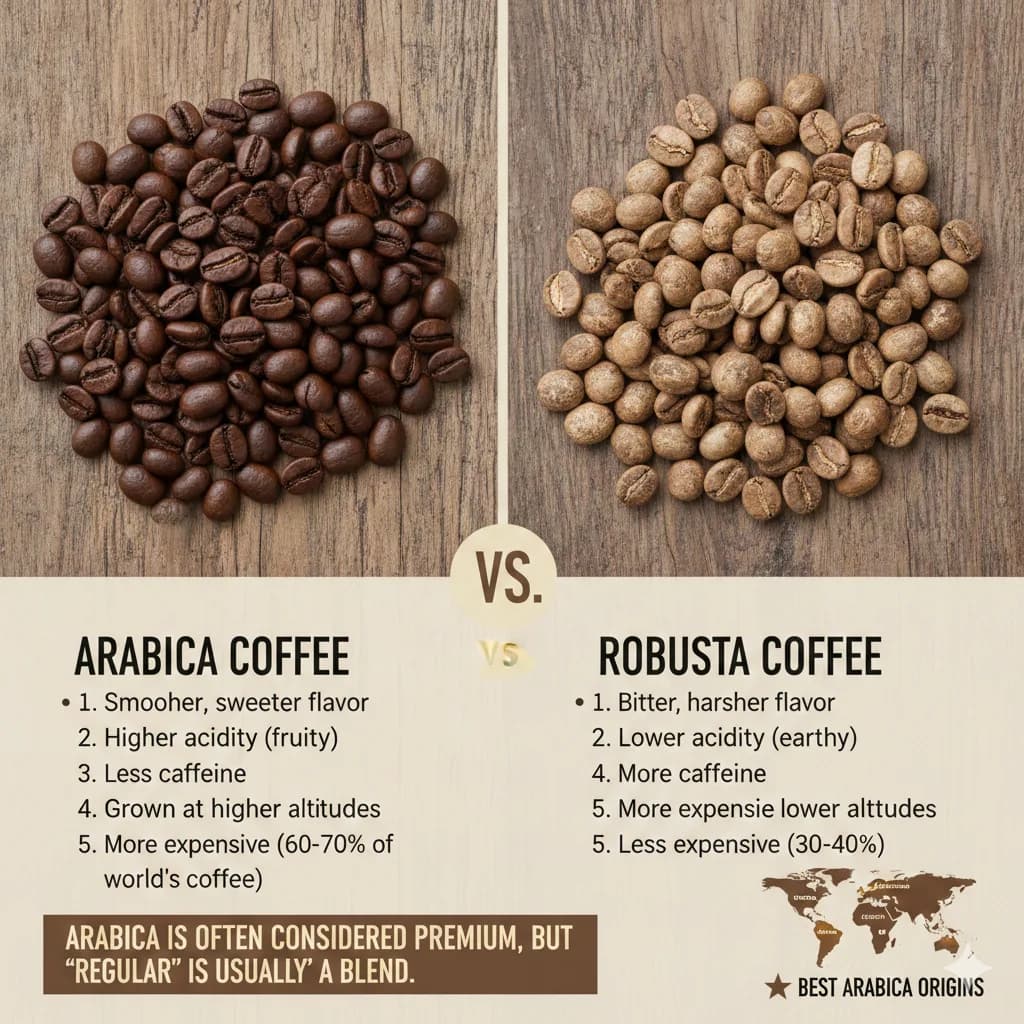
The primary differences lie in flavor and caffeine content. Arabica beans are known for their sweet, complex flavors and higher acidity, containing about caffeine. Robusta beans are more bitter, earthy, and have nearly double the caffeine (around ), making them heartier but less refined in taste.
Is Arabica coffee better than regular coffee?
"Arabica" refers to the species of the bean, not necessarily a brand. However, in the coffee industry, Arabica is widely considered superior to Robusta because of its diverse flavor notes (like sugar, fruit, and berries) and smooth finish. Most "specialty coffee" is Arabica.
Why is Arabica coffee more expensive?
Arabica beans are more costly because the plants are delicate and difficult to grow. They require high altitudes, specific humidity levels, and are more susceptible to pests and "coffee leaf rust." Because they must be hand-picked on steep terrains, the labor costs are higher compared to mechanically harvested Robusta.
Does Arabica coffee have less acid?
Actually, Arabica is known for having higher acidity than Robusta, but it is a "bright" or "pleasant" acidity (similar to the tang of an apple or citrus). If you are looking for "low-acid" coffee for a sensitive stomach, look for dark-roasted Arabica or beans from lower-altitude regions like Brazil or Sumatra.
Where does the best Arabica coffee come from?
While "best" is subjective, the most famous Arabica beans come from the "Bean Belt" regions. Ethiopia is celebrated for floral and tea-like notes, Colombia for balanced chocolate and nut flavors, and Panama for the rare and prestigious Geisha variety.
Feature : Arabica Details Scientific Name: Coffea arabica Global Production: ~60% to 70% Ideal Altitude: 600m – 2,000m (High Altitude) Caffeine Content: ~1.2% to 1.5% (Lower/Smoother) Flavor Profile: Sweet, Fruity, Floral, Chocolatey Acidity Level: Bright and nuanced Chromosomes: 44 (Double the complexity of Robusta) Visual Cue: Oval shape with an S-shaped center crease